

Self-Sabotage: Why Do We Do It to Ourselves, and Does It Ever Stop?
The Lies We Tell Ourselves
“I’m not good enough.”
“What’s the point? It’ll only end anyway.”
“Nothing good ever seems to last for me.”
“Someone else is already doing this, so why would anyone want to hear what I’ve got to say?”
“People will judge me.”
“I’m too old.”
“What if nobody supports me?”
“I sound stupid.”
And one of the biggest ones: “I’ll do it when I feel ready.”
The trouble is, that day doesn’t always come.
I’ve lost count of the number of times people talk themselves out of doing something before they’ve even given themselves a chance. We can turn one little decision into a full-blown argument in our own heads, coming up with every possible reason why it might go wrong. Posting a photo on social media can suddenly feel like standing naked in the middle of town while everyone points and laughs. 😂
It’s ridiculous when you step back and look at it, but when you’re the one caught up in those thoughts, it doesn’t feel ridiculous at all. It feels real. You start worrying about what people will think, whether you’ll look stupid, whether anyone will care and whether you’ll regret putting yourself out there in the first place.
So you don’t do it. You tell yourself you’ll try another day, when you’re more confident, when life is less complicated or when you feel a bit better about yourself. Sometimes that makes sense. Other times, you’re just finding another reason to put something off because the thought of getting it wrong feels worse than never trying at all.
And sometimes we become our own biggest obstacle without even realising we’re doing it.
There are reasons we learn to think this way. Maybe you grew up being criticised, compared to other people or made to feel that you were too much, too loud, too sensitive or simply not good enough. Maybe you were laughed at when you tried something new, rejected when you put yourself out there or made to feel stupid for having an opinion.
After a while, you learn to protect yourself. If you don’t try, nobody can tell you that you’ve failed. If you don’t put your work out there, nobody can criticise it. If you don’t let people get close, they can’t hurt you in quite the same way.
It feels safer to stay where you are, even when where you are isn’t making you happy.
I’ve come to realise that sometimes we can get so used to expecting things to go wrong that when something good comes along, we struggle to trust it. We look for the catch, question whether we deserve it or start preparing ourselves for the moment it all falls apart. It’s exhausting living like that, because you’re not just dealing with what’s happening in front of you. You’re also fighting every possible version of what might happen next.
Chronic illness makes it harder, too
When you’re living with chronic illness, confidence can take a proper beating. You might want to make plans, start something new or commit to an opportunity, but you never know how your body is going to behave. One day you might feel capable of taking on the world, and the next you’re struggling to get through the basics.
After a while, you start questioning yourself before anybody else has even had the chance to.
Can I really commit to this? What happens if I have a flare and have to cancel? Will people think I’m unreliable? What if I can’t give it everything I’ve got? Will they think I’m lazy or that I haven’t bothered trying?
You can end up talking yourself out of things because you’re trying to protect yourself from disappointing other people. You might stop asking, stop applying, stop making plans or stop talking about the things you’d love to do because it’s easier than explaining why you can’t always manage them.
But there’s a difference between recognising your limitations and deciding your life has to shrink around them completely.
I’m not going to sit here and tell anyone with chronic illness that they can achieve absolutely anything if they just believe in themselves hard enough. That’s bollocks. Our health, our circumstances and our responsibilities can put genuine limits on what we can do, and positive thinking doesn’t magically remove them.
But being ill doesn’t mean you stop having ambitions, interests or things you want for yourself. Sometimes you need to adapt the plan, take longer, ask for help or accept that your version of progress might look different from somebody else’s. That isn’t failure. It’s working with the reality of your life rather than constantly beating yourself up because you can’t do everything the way you used to.
You are still allowed to want things. You are still allowed to have a go. And you are still allowed to change direction if something isn’t working for you.
So how do we stop getting in our own way?
I don’t think the answer is to wait until we’re suddenly full of confidence, because some of us could be waiting a bloody long time. Confidence isn’t always something you have before you start. Sometimes it comes from doing something that scares you, finding out you can handle the outcome and slowly learning that you don’t have to run away from every uncomfortable feeling.
That doesn’t mean throwing yourself into everything all at once. If something feels overwhelming, break it down. Send the email rather than worrying about the entire project. Write a paragraph rather than telling yourself you need to finish the whole thing today. Make the phone call, ask the question or take the first small step you’ve been putting off.
And if you don’t manage it today, that doesn’t mean you’ve failed. You can try again when you’re able to. The point isn’t to turn self-improvement into another bloody stick to beat yourself with. It’s to stop letting fear make every decision for you.
You also have to get honest with yourself about the difference between something genuinely not being right for you and being frightened to try it. Sometimes walking away is sensible. Sometimes resting is exactly what you need. Not every opportunity is worth chasing, and not every uncomfortable situation is something you need to push through.
But if you keep finding yourself wanting something and then inventing a hundred reasons why you shouldn’t even try, it’s worth asking yourself what’s really stopping you. Is it the situation itself, or are you already assuming you’ll fail before you’ve started?
That question won’t solve everything, but it might help you see where you’re getting stuck.
A reminder from SBQ 👑
You are not every mistake you’ve made. You’re not every cruel thing somebody has said about you, and you’re not automatically right just because the voice in your head sounds convincing. That voice can be a right pain in the arse, especially when it keeps dragging old experiences into situations that haven’t even happened yet.
I’m not saying ignore every doubt or pretend you’re brilliant at everything. We all have things to learn, and sometimes criticism is worth listening to. The important thing is learning to tell the difference between something that can help you grow and the old familiar voice that tells you not to bother because you’re never going to be good enough anyway.
Your past might help explain why you struggle with certain things, but it doesn’t have to make every decision for you. You can acknowledge what you’ve been through without deciding that it’s all you’re ever going to be. You can be a work in progress without treating yourself as a lost cause.
And please, stop comparing your beginning to somebody else’s middle. You don’t know what they’ve dealt with, what help they’ve had or how many times they’ve had to start again themselves. Someone else doing something similar to you doesn’t mean there’s no room for you. Nobody gets to own an entire idea just because they got there first.
At SBQ, I want women to feel they can show up as they are, not as some polished version of themselves they think the world will approve of. Women who are rebuilding, struggling, learning, changing direction and trying again. Women who have spent years doubting themselves and are finally starting to question whether that doubt deserves quite so much power.
You don’t have to g
More stories
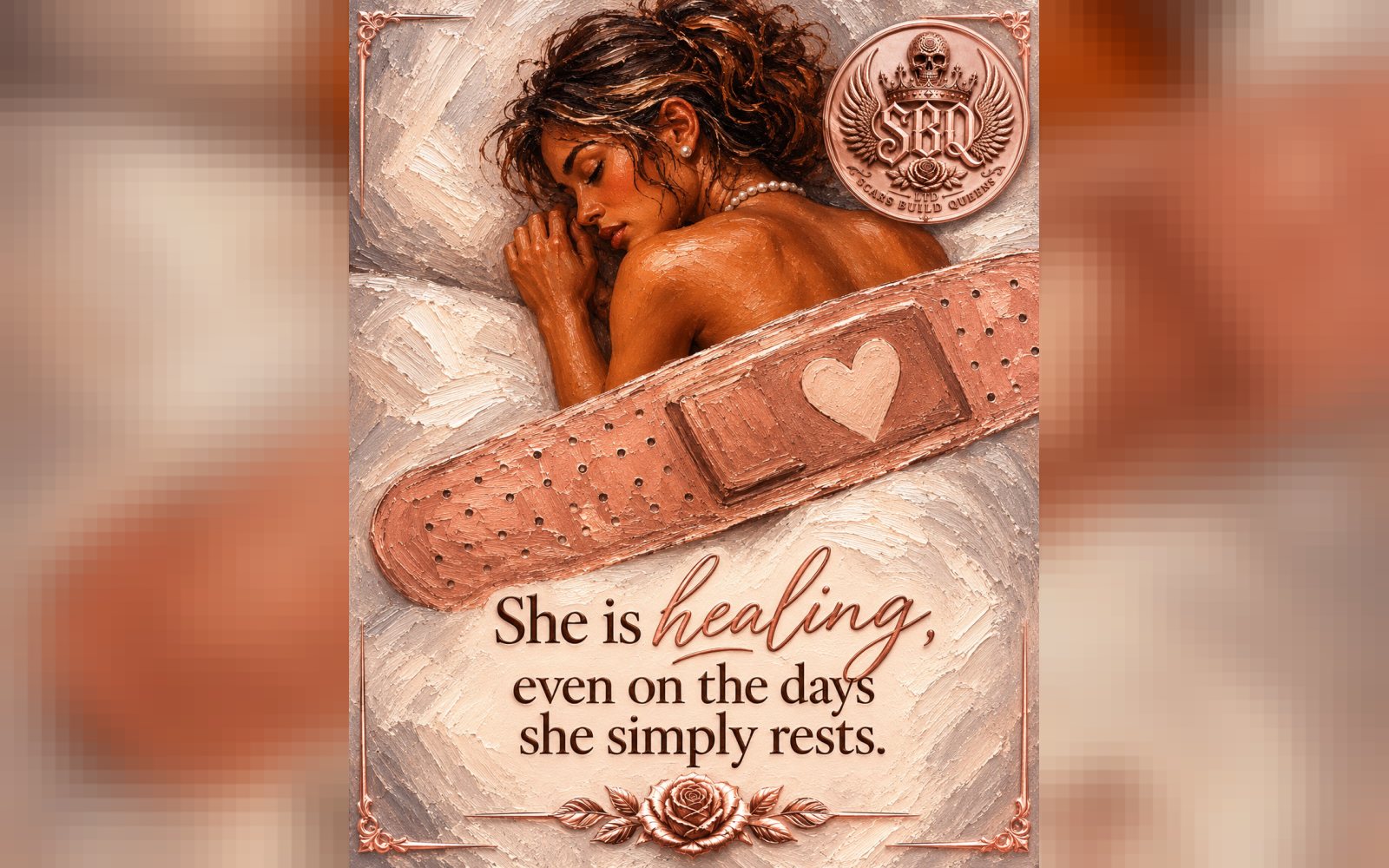 Let’s be honest, healing isn’t always pretty, positive or particularly productive!
🌹 SHE IS HEALING, EVEN ON THE DAYS SHE SIMPLY RESTS. Let’s be honest, healing isn’t always pretty, positive or particularly productive!...
 Talk Club, Hornets Rugby and Why Men Need Somewhere to Talk
Meeting Steve Barnard of Talk Club Weston-super-Mare, why rugby mattered to my son, and why men deserve somewhere to talk. How are you, out of 10?
 Choosing Sobriety
Why P chose sobriety after losing her husband to alcoholism. On enabling each other, the lie that one won't hurt, and why alcohol is so easy to excuse.
