
Healing Is Messy
THE UGLY SIDE OF HEALING: WHEN YOU FINALLY STOP HIDING
Sometimes, the hardest part of healing is admitting that you’re not okay, even when things are finally starting to get better.
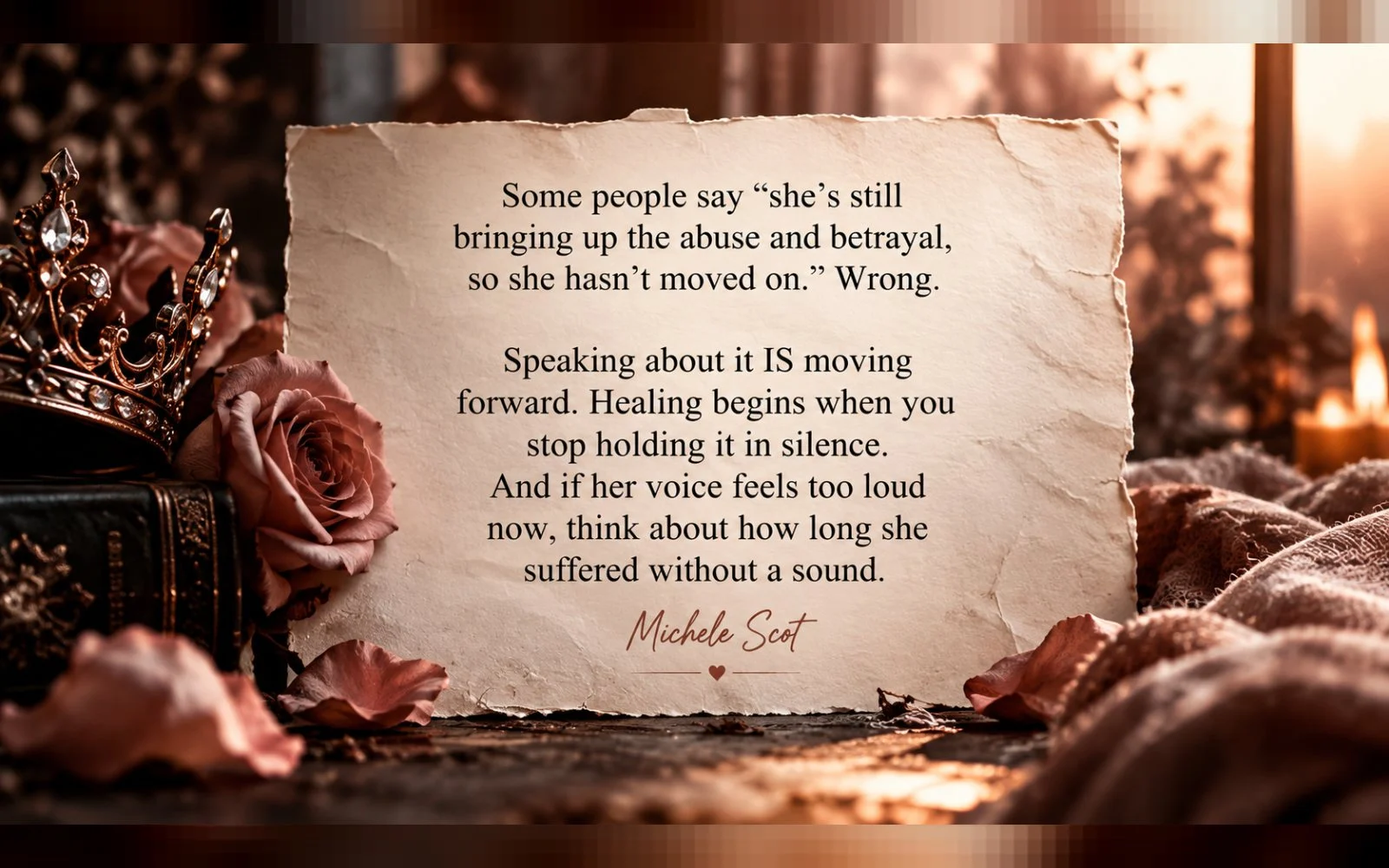
Recently, my stepmum sent me something that really hit home. It was about people who say a woman hasn’t moved on because she still talks about the abuse and betrayal she’s been through. The message was simple: speaking about what happened doesn’t mean you’re stuck in the past. Sometimes, it’s the first time you’ve felt able to speak about it at all.
It made me think about how long I’ve spent trying to bury things, get on with life and act as though I could handle everything on my own.
For years, I thought being strong meant keeping my mouth shut. I was angry, guarded and determined not to let people see how much I was struggling. I carried on because that’s what I knew how to do. There was always something else to deal with, another problem to get through, another reason why stopping and dealing with my own feelings could wait.
Except those feelings don’t disappear just because you ignore them. They sit there, and sooner or later, they find a way out.
WHEN SOMETHING GOOD MAKES YOU SUSPICIOUS
Trauma has a way of changing how you look at people. When you’ve been hurt, betrayed or let down enough times, you can reach a point where even kindness makes you suspicious. You start looking for the catch because, in your experience, good things have often come with a price.
Someone offers to help, and instead of feeling grateful, you wonder what they want from you. Someone treats you well, and part of you is waiting for the moment they change their mind. You might want to trust them, but wanting to trust somebody and actually feeling safe enough to do it are two very different things.
When something feels good, it can feel like a set-up.
I know how anxious and guarded I can become. I overthink things, question intentions and sometimes make myself feel ten times worse by going over every possible outcome in my head. There are days when everything I’ve been carrying catches up with me, and I feel low, overwhelmed and struggling to cope.
It’s exhausting when you’re trying to live in the present, but your head keeps dragging you back to things that happened years ago or warning you about things that haven’t even happened yet.
The difficult part is that the person in front of you now might not be anything like the person who hurt you before. They haven’t necessarily done anything wrong, but they can still end up dealing with the consequences of what somebody else did.
That isn’t fair on them, and it isn’t what I want for myself either.
My past explains a lot about why I react the way I do, but I don’t want it making every decision for me. I don’t want to assume the worst about people who are genuinely trying to be there for me. I also know that learning to recognise the difference between a real warning sign and my own fear isn’t something I can fix overnight.
And this isn’t just about romantic relationships. It’s friendships, family, colleagues and anybody else who comes into our lives. Trauma can affect how we communicate, how we accept support, how we deal with disagreements and whether we let people get close enough to know the real us.
Sometimes we push away the very people we’d like to keep in our lives. Not because we don’t care, but because allowing ourselves to care can feel bloody frightening when we’ve been hurt before.
WHEN YOU FINALLY HAVE SPACE TO FALL APART
There’s something else I’ve been thinking about. When you’ve spent years just getting through life, you don’t always get the chance to process what’s happening to you. You deal with whatever is in front of you, put your feelings to one side and carry on because you haven’t got the time, energy or choice to do anything else.
Then, sometimes, somebody comes along who genuinely wants to help. They give you support, make things a little easier or offer you some breathing space. You finally have a chance to put some of the weight down, and instead of suddenly feeling better, you find yourself struggling in ways you weren’t expecting.
All the things you’ve pushed aside can start coming back up. The trauma, the anger, the grief, the exhaustion and the feelings you’ve been too busy surviving to sit with. You might become more aware of how physically and mentally drained you actually are because you’re no longer running on pure determination just to get through the day.
It can feel confusing when life is offering you something good, but inside you’re struggling more than you were before.
I think it’s important to say that this doesn’t happen to everybody, and feeling worse isn’t some necessary stage you have to go through to heal. But for some of us, finally having a bit of space can bring things to the surface that we’ve spent years avoiding.
And it can put a strain on the relationships around us.
You might want somebody close, then suddenly feel overwhelmed when they are. You might appreciate their help but struggle to accept it. You might want to explain what’s happening inside your head, but not even understand it yourself well enough to put it into words.
The person trying to support you might see you withdrawing, getting upset or becoming defensive without understanding what’s behind it. Meanwhile, you’re trying to work out why you’re struggling when, on paper, things should be getting easier.
Mental health, trauma and physical illness can all affect how much you have in the tank. When you’re exhausted, anxious or overwhelmed, even small things can feel enormous. Sometimes it’s difficult to work out whether you’re reacting to what’s happening now, something from your past, or a mixture of both.
But understanding why we’re struggling doesn’t mean we can ignore the effect our behaviour has on other people. We have to be willing to talk about what’s going on, ask for help when we need it and recognise when our reactions are hurting someone who is trying to care for us.
At the same time, accepting somebody’s support doesn’t mean you owe them unlimited access to you. You can be grateful for their kindness and still have boundaries. You can appreciate what somebody does for you without being ready for everything they might want from you. Genuine care should leave room for your choices, your feelings and your right to say no.
I’m learning that letting somebody help me doesn’t automatically make everything better. Sometimes, it shows me just how much I’ve been struggling underneath the surface.
And that’s a difficult thing to face, especially when you’re trying to build something good with somebody and you desperately don’t want your own struggles to damage it.
YOU CAN HURT PEOPLE WHO NEVER HURT YOU
This is probably one of the hardest parts of healing to talk about, because it means looking at yourself rather than concentrating on what everybody else has done to you.
Sometimes, we hurt people who have never hurt us.
We get defensive when somebody is trying to help. We assume the worst, push people away or react with anger because we’re frightened, overwhelmed or expecting something bad to happen. We can end up treating people as though they’re responsible for pain they had absolutely nothing to do with causing.
You can bleed on people who never cut you.
That doesn’t make you a terrible person, but it does mean you have to be honest about your behaviour.
I’ve had to think about this in my own life. I’ve carried so much anger and hurt that there have been times when I haven’t properly recognised how it might be affecting the people around me. I know that being in pain doesn’t mean I’m always right, and it doesn’t mean that the way I react can’t hurt somebody else.
I can explain where my reactions come from, but I can’t expect that explanation to make the impact disappear.
For me, this has become particularly personal when I think about the person who believed in me enough to help me build SBQ.
I’m sitting here at a computer with two monitors, equipment given to me by a friend who wanted to give me an opportunity. They believed in me and wanted to help me create something of my own, something that could become more than just a clothing brand. I’ll always be grateful for that.
But gratitude doesn’t mean I should pretend everything has been easy, or that I haven’t brought my own struggles into the situation.
While somebody was trying to support me and help me build something positive, I was still carrying a lot of unresolved hurt. I was guarded, angry and trying to make sense of things that had happened to me. Looking back, I have to acknowledge that I may have hurt somebody who was genuinely trying to be there for me.
That’s not comfortable to admit. It’s much easier to talk about the people who have hurt us than it is to consider whether our own pain has hurt someone else.
But I don’t want to keep repeating patterns just because they once helped me survive. I don’t want my past to keep taking things away from me now, and I don’t want to push good people out of my life because I’m frightened of what might happen if I let them in.
That doesn’t mean blaming myself for everything or pretending the things I’ve been through don’t matter. It means being able to hold two truths at once: I’ve been hurt, and I still have a responsibility to think about how I treat other people.
Trauma can explain a reaction without excusing the hurt it causes.
I’m still working through things. I haven’t suddenly got all the answers, and I’m not going to sit here pretending I’ve reached some magical point where everything makes sense. But I can recognise when I’ve got things wrong. I can appreciate somebody’s kindness while admitting that I haven’t always handled things as well as I could have. And I can try to do better without telling myself that I’m a bad person for having struggled.
To me, that’s accountability. Not taking responsibility for what other people did to you, but taking responsibility for what you do with the pain they left behind.
HEALING DOESN’T COME WITH A FINISHING LINE
Social media can make healing look very tidy. You have a breakthrough, learn a lesson, forgive everybody and somehow come out the other side as a calmer, happier version of yourself.
Real life isn’t always that straightforward.
Sometimes healing means admitting that something still hurts, even though it happened years ago. Sometimes it means talking about things you’ve been told to forget. Sometimes it means apologising to somebody because you’ve realised your behaviour wasn’t fair. And sometimes it means accepting that you’re not coping as well as you’ve been pretending to.
I’m trying to face things instead of pushing them away and hoping they’ll disappear. I’m trying to understand why I find it difficult to trust, why I sometimes struggle to accept good things and why my first instinct can be to protect myself even when nobody is attacking me.
I’m also trying to stop giving myself a hard time for not being further along.
Recently, a friend said something that stuck with me:
“The past is depression, the future is anxiety, so live in the present.”
I know that isn’t a complete explanation of depression or anxiety, but it made me think about how much time I spend looking backwards and forwards instead of being where I actually am.
I replay things that have happened, wonder what I could have done differently and think about how my past has shaped me. Then I start worrying about what might happen next. What if things go wrong? What if I trust somebody and get hurt again? What if something good doesn’t last?
Before I know it, I’m spending so much time preparing myself for things that might happen that I’m not properly enjoying the things happening right now.
I don’t want to live like that forever.
I want to be able to appreciate people who are good to me without immediately looking for a reason not to trust them. I want to enjoy opportunities without waiting for something to go wrong. I want to be grateful for the good things in my life without feeling as though I need to prepare myself for losing them.
That doesn’t mean ignoring my past or pretending I can control what happens in the future. It means accepting that I can’t change what has already happened, and I can’t predict or prevent every difficult thing that might come my way.
What I can do is pay attention to how I’m living now. I can try to recognise when fear is taking over, communicate instead of shutting down and take responsibility for the things I need to work on.
I can also remind myself that something feeling unfamiliar doesn’t automatically mean it’s dangerous.
I’m allowed to enjoy the good things in my life without constantly waiting for them to go wrong.
I’m not there yet. Some days are easier than others, and some days I still find myself falling into old ways of thinking. But at least I’m starting to recognise what’s happening instead of automatically accepting every fear in my head as the truth.
THIS IS WHAT SCARS BUILD QUEENS MEANS TO ME
This is why SBQ has become about so much more than clothing.
Scars Build Queens is about real women and the things we carry, including the parts of our lives we don’t usually put on display. It’s about the experiences we’ve survived, the things we’ve kept quiet and the work involved in rebuilding when life has knocked us sideways.
But I don’t want SBQ to be another brand telling women they have to be strong all the time.
I’m tired of the idea that strength means never struggling, never needing help and always having a positive attitude. Sometimes strength is admitting you’re not okay. Sometimes it’s asking somebody to help you because you can’t manage everything alone. Sometimes it’s apologising when you’ve hurt somebody, even when that was never your intention.
And sometimes, strength is simply being honest about where you are in life, without dressing it up to make it look better for other people.
I want SBQ to be a place where women can talk about their real experiences, not just the polished versions we put on social media. The difficult days, the setbacks, the things we’re embarrassed to admit and the moments when we don’t feel strong at all.
I want women to be able to share their stories without feeling that they have to turn every painful experience into an inspirational message. Sometimes something awful happens, and it takes a long time to work out how to live with it. Sometimes there isn’t a neat lesson at the end. Sometimes you’re just doing your best to get through it.
That deserves honesty and understanding too.
I’m building SBQ while I’m still working on myself. I’m learning as I go, making mistakes, recognising things I need to change and trying to turn some of my own experiences into something that might help another woman feel less alone.
I know I won’t get everything right. I don’t expect to. What matters to me is that SBQ stands for something real, rather than just putting a nice slogan on a piece of clothing and calling it empowerment.
I want women to know that their stories matter, even the bits they struggle to talk about. They can be proud of how far they’ve come and still admit that some things hurt. They can appreciate the people who support them while acknowledging that learning to trust is difficult. They can take responsibility for their own growth without blaming themselves for what happened to them.
And they don’t have to pretend they’ve healed just because other people are more comfortable when they stop talking about what they’ve been through.
Talking about the past doesn’t automatically mean you’re trapped in it. Sometimes, you’re still trying to understand it. Sometimes, you’re finally ready to say out loud what happened. And sometimes, you need to tell your story because keeping it inside for years has done enough damage already.
I don’t believe healing means becoming somebody who has never been hurt. I think it’s about finding a way to live with what happened without letting it dictate every decision, every relationship and every part of who you are.
That takes time. It takes honesty. And sometimes it means facing things about yourself that you’d much rather avoid.
I’m still doing that work. I’m still learning how to accept help, how to trust, how to recognise when my past is affecting my present and how to take responsibility when I get things wrong. I’m not writing this as somebody who has worked it all out. I’m writing it as somebody who’s trying to be honest about where she is.
Because scars don’t mean you’re broken beyond repair. But they also don’t magically make you wiser, stronger or better at handling life. What matters is what we do with the experiences we’ve had, how we treat ourselves and others, and whether we’re willing to keep looking honestly at the things that need to change.
That’s what I want SBQ to stand for. Not perfection, not pretending and not pressure to turn pain into something beautiful for everybody else to look at.
Just real women, real stories and the truth about what it takes to keep going.
SCARS BUILD QUEENS.
A little reminder before you go
If any of this feels familiar, you don’t have to work through everything on your own. Talking to somebody you trust or seeking professional support can help you make sense of what you’re experiencing. Struggling doesn’t mean you’ve failed, and finding things difficult even when life is improving doesn’t mean you’re doing healing wrong.
This is my personal experience and perspective, not a substitute for professional mental health advice or support.
#ScarsBuildQueens #SBQ #TheUglySideOfHealing #HealingJourney #TraumaRecovery #MentalHealthMatters #SelfAwareness #EmotionalHealing #PersonalGrowth #BreakingTheSilence #RealWomenRealStories #HealingIsNotLinear #Accountability #YouAreNotAlone
More stories
 BAD BOYS vs BAD BITCHES
 Funny how quickly a woman becomes the villain when she stops putting up with the bullshit. 😂 There’s something quite interest...
 🌹 WE REPEAT WHAT WE DON’T REPAIR.
 Right, let’s talk about patterns. Because some of us really do need to stop going round in circles wondering...
 Bla-bla-bla
🌹 BLA-BLA-BLA… I’M TOO BUSY RISING! 👑 Let’s get one thing straight. We’re not here to spend our lives worrying about what everyone else t...
